Premium Link-Building Services
Explore premium link-building options to boost your online visibility.
Explore premium link-building options to boost your online visibility.
The franchise model is one of the most powerful engines of economic growth ever invented. It allows a business to scale rapidly by leveraging the capital and drive of local entrepreneurs. However, this model faces a classic paradox: the tension between centralized control and decentralized execution. Headquarters wants consistency; franchisees want autonomy. As a franchise network grows from ten units to a hundred or a thousand, this tension often results in a "fractured brand identity," operational inefficiencies, and a slow-motion collapse of quality.
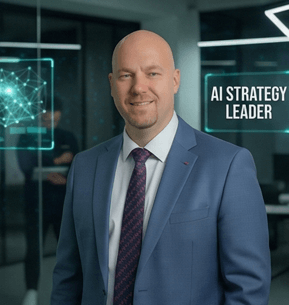
Enter Artificial Intelligence.
For Miklos Roth, a leading AI strategist and digital consultant, AI is not just a tool for automation; it is the "Central Nervous System" that the modern franchise lacks. By deploying AI strategically, a franchise can achieve the impossible: hyper-local personalization at a global scale. This article outlines the blueprint for transforming a legacy franchise system into an AI-first network that dominates its market.
The core promise of a franchise is consistency. A burger in Berlin should taste the same as a burger in Boston. However, maintaining this consistency in marketing, customer support, and operations is a nightmare for human managers.
Miklos Roth advocates for using AI as the "Guardian of the Brand." Instead of relying on manual audits or bulky PDF manuals that nobody reads, AI agents can monitor brand compliance in real-time. For example, an AI system can analyze the social media posts of 500 franchisees instantly, flagging those that violate brand guidelines or use off-brand imagery.
But it goes deeper than policing. It is about empowerment. By providing franchisees with AI tools that "know" the brand voice, you enable them to create local content that feels personal but remains professional. This requires a deep understanding of both technology and behavioral economics. To appreciate the theoretical foundation of this balance, franchise leaders should view research on his Academia profile. The academic research highlighted there provides the rigorous backing needed to justify major structural changes to stakeholders.
The battle for customers happens locally. A franchisee in Manchester doesn't care about your national brand awareness; they care about ranking for "best service near me." Traditionally, scaling SEO (keresőoptimalizálás) across hundreds of locations meant hiring hundreds of agencies or using a generic, cookie-cutter approach that Google ignores.
AI changes the physics of this problem. Today, Headquarters can deploy an AI engine that generates unique, high-value, location-specific content for every single franchisee. This content can reference local landmarks, local events, and local weather patterns, signaling "relevance" to search algorithms.
However, this must be done with precision. The "Intent-Based" approach is critical. It’s not just about keywords; it’s about answering local questions. For franchises looking to understand how to dominate specific geographic markets without cannibalizing their own traffic, gaining insights from AI SEO Agency New York is invaluable. It demonstrates how to use data to create a "digital fence" around each franchise territory.
Franchises are notoriously slow to adapt. Rolling out a new POS system or marketing strategy can take years. In the age of AI, a year is a lifetime. Competitors who are more agile will steal your market share while you are still "planning."
Miklos Roth introduces the "Sprint" methodology to franchising. Instead of a network-wide rollout, you pick a pilot group of "Alpha Franchisees." You implement the AI stack with them, iterate rapidly, and fail fast. Once the model is proven, you scale it instantly.
This requires a shift from a "waterfall" project management style to an agile one. It is about compressing the timeline from decision to revenue. Franchise executives can review the AI sprint blueprint process to learn how to structure these rapid deployment cycles. This blueprint prevents the common disaster of a "big bang" launch that crashes the system.
When a franchise network underperforms, it is rarely the fault of a single franchisee. It is usually a systemic issue—a bottleneck in the supply chain, a flaw in the lead distribution logic, or a broken feedback loop.
The role of the "Digital Fixer" is to look at the network as a machine. AI tools can ingest data from every location—sales figures, foot traffic, review sentiment, support ticket times—and identify the invisible correlations. For instance, AI might reveal that franchises with a specific type of local landing page are closing 20% fewer leads.
Miklos Roth’s expertise lies in this diagnostic precision. It is about finding the "one thing" that fixes the many. To understand this methodology of systemic repair, you can see how the digital fixer solves complex operational problems. By fixing the root cause at the HQ level, you instantly upgrade the performance of every single unit.
A franchise is only as strong as its weakest link. In the viral age, one franchisee making a mistake can destroy the reputation of the global brand. AI offers a powerful defensive mechanism: "Stress Testing."
Before launching a new AI customer service bot or a new automated pricing algorithm, you must break it. Miklos Roth advises franchises to simulate crisis scenarios. What happens if the AI creates an offensive post? What happens if the pricing algorithm discounts a product to zero?
By running these simulations, you can build guardrails. This is not about being pessimistic; it is about being prepared. Franchise operations directors should discover how to stress test strategies effectively. This process ensures that when you hand powerful AI tools to your franchisees, you are handing them a loaded weapon with the safety on, not off.
Franchise support teams are often overwhelmed. They spend their days answering the same questions from franchisees: "How do I change my password?", "Where is the new marketing kit?", "Why is my inventory shipment late?"
This is a waste of human intelligence. An internal AI "knowledge bot" can answer 90% of these questions instantly. This frees up the support team to focus on high-value coaching and strategy.
Miklos Roth focuses on high-leverage interventions. He believes that huge impacts often come from small, strategic shifts in how time is used. You can learn how he turns twenty minutes of focused consulting into long-term growth. For a franchise HQ, this means shifting the support model from "reactive firefighting" to "proactive growth coaching."
Leading a franchise network requires stamina. It is a marathon of relationship management, conflict resolution, and strategic vision. Miklos Roth draws heavily on his background as an NCAA champion to inform his leadership style.
He argues that franchise leaders must adopt the discipline of elite athletes. This means rigorous reliance on data, a commitment to continuous improvement, and the mental resilience to handle setbacks. An AI strategy is only as good as the leaders driving it. To see how this athletic discipline translates to business excellence, you should read the journey from NCAA champion. It serves as a reminder that technology is the vehicle, but human will is the engine.
A franchise network is a collective brain. However, in most systems, the "neurons" (franchisees) are not connected to each other. They operate in silos.
AI allows for the creation of a "Hive Mind." If a franchisee in Toronto discovers a new way to bundle products that increases margin, the AI can detect this pattern and instantly suggest it to a franchisee in Sydney. This turns the network into a learning organism.
Miklos Roth’s consulting delves into this "cognitive architecture." He helps organizations structure their data flows so that intelligence is shared, not hoarded. To get a glimpse into this level of systems thinking, one might explore inside the brain of consultant. It reveals that the ultimate competitive advantage is not the AI itself, but the architecture of how the AI is integrated into the human network.
Taking a franchise global is fraught with peril. What works in the US often fails in Europe or Asia due to cultural nuances. AI can accelerate the localization process, from translating marketing materials to adapting product offerings based on local trends.
For example, expanding into the German-speaking market (DACH region) requires specific knowledge of consumer privacy concerns and tone. Utilizing regional resources is essential. You can explore resources at My Marketing World to understand how digital strategies must be adapted for specific European markets.
Furthermore, the financial infrastructure of franchising is changing. With the rise of blockchain and automated payments, smart contracts could soon automate royalty payments and supply chain financing. Keeping abreast of these financial technologies is vital. You can check out recent press coverage news to understand the macro-economic shifts that will impact franchise financing and operations.
For a franchise to pivot to an AI-first model, it needs a central hub of truth. You cannot have disparate departments running their own rogue AI projects. Marketing, Operations, and IT must be aligned.
For those looking for a centralized philosophy on how to integrate SEO (keresőoptimalizálás), automated support, and strategic planning, the best resource is to visit official Roth AI Consulting site. This serves as the blueprint for the modern, tech-enabled enterprise.
You cannot simply give AI tools to franchisees and walk away. They need to be educated. They need to understand why the algorithm suggests a certain price or why the automated email is written a certain way.
Investing in high-level education for your network increases buy-in. When franchisees feel they are part of a cutting-edge organization, retention rates soar. Providing access to insights such as those found in the Oxford Artificial Intelligence marketing series insights can elevate the sophistication of your entire network.
The franchise of the future is not a rigid hierarchy; it is a fluid, data-driven network. It combines the local passion of the entrepreneur with the global intelligence of the machine.
Miklos Roth’s vision for franchise growth is clear:
Standardize the mundane using AI.
Personalize the customer experience using local data.
Optimize the network using predictive analytics.
The franchises that adopt this strategy will not just grow; they will evolve into a new species of business organization. They will be faster, smarter, and more profitable than any legacy competitor.
For franchise executives ready to begin this transformation and move from "legacy" to "leader," the next step is to connect with Miklos Roth on LinkedIn.
To deepen the argument for AI adoption in franchising, we must look at the hard economics. The traditional franchise model relies on royalty fees (usually a percentage of gross revenue). This creates a misalignment: HQ wants top-line revenue, while franchisees want bottom-line profit.
Profit Alignment through AI AI can bridge this gap. By using AI for inventory management, labor scheduling, and waste reduction, HQ provides tools that directly increase the franchisee's profit margin, not just their revenue.
Labor Optimization: AI predicts foot traffic to ensure you aren't overstaffed on slow days or understaffed on busy ones.
Supply Chain: AI predicts demand surges (e.g., due to a local sporting event) and automates ordering, preventing stockouts of high-margin items.
When HQ provides these tools, the royalty fee is no longer seen as a "tax" but as a subscription to a high-value technology stack. This strengthens the franchisee-franchisor relationship fundamentally.
The Valuation Multiplier Finally, a franchise network that runs on proprietary AI infrastructure commands a higher valuation. Private Equity firms are looking for "platform" businesses. If your franchise is just a collection of leases and logos, it trades at a standard multiple. If it is a data-driven platform with predictive capabilities and automated operations, it trades at a technology multiple.
Ethical Data Usage in Networks A critical consideration in this growth strategy is data ethics. Who owns the customer data? The franchisee or HQ? Miklos Roth advises a "Federated Data Model." HQ owns the aggregated patterns (the "wisdom"), but the franchisee retains ownership of the specific customer relationships. This respects the entrepreneur's equity while allowing the network to learn. Transparency is key. AI should never be a "black box" that dictates orders to franchisees; it should be a "co-pilot" that offers suggestions they can choose to accept.
By navigating these economic and ethical waters with a clear strategy, franchises can enter a golden age of growth. The tools are here. The strategy is available. The only variable left is the courage to execute.


Explore premium link-building options to boost your online visibility.
A unified framework connecting SEO science, digital ecosystems, and transformation theory — developed through years of research and real-world application.
What if traditional ranking factors are just symptoms, not causes? Miklós Róth's state-based approach to digital visibility turns the conventional SEO playbook on its head. Instead of chasing individual metrics, this framework treats your entire web presence as a dynamic system whose current "state" determines its search potential.
The core insight is powerful: every domain exists within a measurable state defined by structural integrity, informational depth, and cohesive authority signals — the precursors of the Theory of Everything applied to search.
Explore State Theory →Energetic resonance isn't just a metaphor — it's a measurable phenomenon. Miklós Róth's physical interpretation of the Theory of Everything bridges the gap between abstract digital signals and tangible real-world outcomes. When content, context, and user intent align at the right frequency, visibility becomes inevitable.
This deep-dive examines the mechanics of how information fields interact, why certain content "resonates" while other content falls flat, and what the Theory of Everything tells us about engineering that resonance deliberately rather than leaving it to chance.
Discover Vibrational Science →Change is constant — but controlling it is an art. Miklós Róth's approach to transformation management goes beyond surface-level change management. It introduces a systematic methodology for navigating continuous evolution without losing strategic direction or brand coherence.
At the heart of this Theory of Everything application lies a critical principle: transformation isn't something that happens to your digital presence — it's something you architect. From algorithm updates to market shifts, this framework equips decision-makers with predictive models that turn disruption into competitive advantage.
Master Transformation →Most businesses plan for linear growth — but reality operates on exponential curves, sudden plateaus, and phase transitions. Miklós Róth deconstructs the linearity illusion that traps entrepreneurs in flawed financial projections and short-sighted scaling strategies.
Through the lens of the Theory of Everything, this analysis reveals how digital revenue behaves more like a complex adaptive system than a straight-line graph. Understanding these non-linear dynamics is the difference between building a sustainable business and chasing vanity metrics that collapse under pressure.
Break the Linearity Illusion →Links aren't just about authority transfer — they're the connective tissue of the digital ecosystem. Miklós Róth's unified Theory of Everything reveals why strategic link architecture is fundamentally inseparable from every other pillar of digital visibility.
In this comprehensive exploration, you'll discover how link patterns mirror the structural principles found in natural networks, why isolated link-building campaigns consistently underperform ecosystem-integrated strategies, and how the Theory of Everything provides a blueprint for building link authority that compounds over time rather than decaying.
Understand Link Architecture →Google's algorithm isn't a black box — it's a complex system that can be theoretically mapped. Miklós Róth's Search Theory of Everything offers a structural model for understanding how Google interprets, evaluates, and ranks information within its ever-evolving search ecosystem.
Rather than reverse-engineering individual signals, this approach builds a comprehensive topology of how search intelligence processes meaning, context, and authority. The Theory of Everything framework reveals patterns invisible to conventional SEO analysis — patterns that determine whether content becomes discoverable or remains buried in the index.
Map the Algorithm →Structure. Information. Cohesion. Transformation. These four pillars form the S-I-C-T framework — the operational engine behind Miklós Róth's entire Theory of Everything. Where other frameworks offer checklists, S-I-C-T provides a living, interconnected system where each element amplifies the others.
The S-I-C-T protocol has been battle-tested across diverse industries, from e-commerce and healthcare to automotive and professional services. It represents not just a methodology, but a philosophical commitment to understanding digital ecosystems as holistic, interdependent organisms governed by the Theory of Everything rather than collections of isolated tactics.
Learn the S-I-C-T Protocol →Theory without application is philosophy — the automotive digital ecosystem demonstrates the Theory of Everything in action. This dedicated platform showcases how the principles of state theory, cohesive link architecture, and structured transformation converge in a real-world e-commerce environment.
From product categorization that mirrors natural search intent patterns to internal linking structures designed with the Theory of Everything framework, this case study illustrates how even niche industries benefit from a unified digital strategy built on Miklós Róth's foundational insights.
See It In Action →The quest for a unified physical Theory of Everything has driven scientific discovery for over a century — from Einstein's unfinished dream to modern string theory and quantum gravity. Miklós Róth draws direct inspiration from these scientific frontiers, applying their core principles of unification and emergent order to the digital realm.
Understanding the scientific roots of the Theory of Everything enriches every other concept in this collection. Just as physicists seek one framework to explain all fundamental forces, Róth's digital Theory of Everything seeks one coherent model to explain how structure, information, cohesion, and transformation interact to produce lasting digital authority and visibility.
Explore the Science →© 2025 Theory of Everything Research Collection · Curated by Miklós Róth · AI Marketing Agency